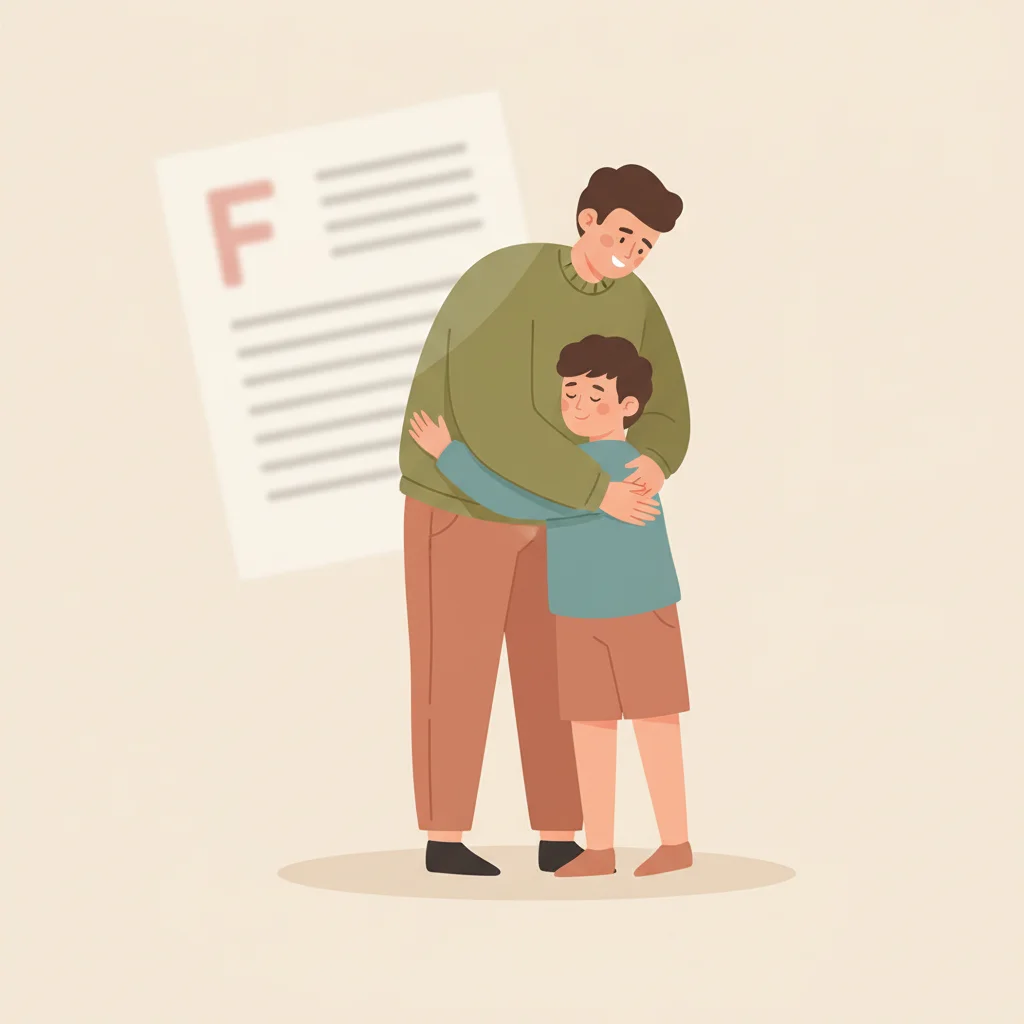
Your child knows the material at the kitchen table but worries about freezing during the test. Repeating "You'll be fine" may leave both of you stuck. Ask what part feels most difficult: the timer, unfamiliar questions, disappointing someone or not knowing what will happen.
Test anxiety in middle school deserves attention without turning every nervous moment into a diagnosis. These suggestions help organize support; they aren't treatment for an anxiety disorder.
Begin with the situation, not a pep talk
Choose a calm moment and ask your child to describe a recent test. Listen before offering a method. A fear of running out of time needs a different conversation from uncertainty about the instructions.
Write down one practical issue you can resolve. Ask the teacher about the format, find the study guide or check where the student should go on test day. Reducing an avoidable unknown doesn't require promising a good result.
Make practice small enough to approach
Start with a familiar question and allow an attempt before showing feedback. If timing itself is upsetting, discuss a gradual approach with the teacher rather than immediately setting a full-length mock exam.
Afterward, describe what happened precisely: "You explained the first step alone; the second needed a hint." A mistake is information about that task, not a verdict on the child's ability.
Keep practice within the teacher's expectations. More questions aren't always the answer when the underlying concept remains unclear.
Keep the evening from becoming all about the test
Plan a stopping point and allow time for ordinary activities. Prepare materials and check the morning routine before bedtime. Avoid repeatedly reopening the whole syllabus whenever a worry appears.
Don't use sleep as the flexible item that absorbs every unfinished task. The CDC's sleep guidance gives age-based recommendations, including 9–12 hours for children ages 6–12 and 8–10 hours for ages 13–17. Individual concerns about sleep should be discussed with a health professional.
Contact the teacher with a concrete observation
Try: "At home, my child can explain the example, but timed practice brings tears and they stop working. What do you see in class? What support or preparation would you suggest?"
The subject teacher and school counselor can help clarify what happens at school and what options exist. If formal supports are relevant, ask about the school's process; a blog cannot promise eligibility or a particular accommodation.
Know when the concern extends beyond preparation
Worry that disrupts sleep, attendance, relationships or ordinary activities deserves more than a revised timetable. Talk to your child's pediatrician or another qualified health professional. You don't have to establish a diagnosis before asking for help.
The National Institute of Mental Health provides guidance and resources for families. Persistent or worsening symptoms should be assessed in their full context, not inferred from a quiz score.
Use progress information carefully
If your child uses Wizidoo, the parent view can support a specific discussion about practice in the app. Wizidoo shows difficulties and available explanations or advice; You might choose one confusing idea and revisit the course together.
Avoid treating the mastery indicator as a readiness certificate or a reason to demand another hour. It records work inside Wizidoo and does not diagnose anxiety or guarantee a grade.
For English-speaking families, use the English web parent experience. The app can prepare questions from photos or a PDF, but human support remains necessary when distress is the main problem.
Debrief one test without replaying every mistake
When your child is ready, ask about one moment that was easier than expected and one that was difficult. They may say they started comfortably but became upset after noticing classmates finish. That is a useful observation to share with the teacher; it is different from not understanding the content.
Agree on one follow-up, such as asking how to handle a question they cannot answer or reviewing the test instructions together. Don't require your child to prove they are no longer worried before returning to normal activities.
If they do not want to discuss it immediately, offer another time. A difficult test should not take over the whole afternoon. When the graded work comes back, separate the teacher's academic feedback from the conversation about distress. Both can matter, and neither is fully explained by the number at the top of the paper.
What can I say on test morning?
Keep it simple: "You have your materials. If a question is difficult, follow your teacher's instructions and do what you can. We can talk afterward." There is no need to make the morning a final interrogation.
After the test, ask how it felt before asking for a predicted score. That leaves room to notice what helped and what still needs support.
Frequently asked questions
Why isn't telling my child 'you'll be fine' helping their test anxiety?
Vague reassurance does not address the practical root of their worry, such as an unfamiliar test format or a strict timer. Ask targeted questions to identify the specific concern and tackle that concrete obstacle together.
How can I tell if my middle schooler's anxiety requires professional care?
Nerves before a test are common, but worry that persistently disrupts sleep, attendance, relationships, or daily routines warrants clinical evaluation. Consult a pediatrician or another qualified healthcare professional, as study tips cannot treat an anxiety disorder.
How should I structure home practice if timed tests cause panic?
Start with a single familiar question without a strict timer, and ask the teacher about a gradual pacing plan. Break practice down into manageable steps rather than immediately forcing a full-length timed mock exam.
What is the best way to contact my child's teacher about test distress?
Share a factual, concrete observation of how test worries show up at home rather than making a general complaint. Ask what the teacher observes in the classroom and request guidance on practical preparation strategies.
Can the school grant formal testing accommodations for my child's anxiety?
Formal supports depend entirely on your school's specific evaluation process and official criteria. Speak directly with the subject teacher or school counselor to explore available options and local procedures.
How much sleep should my child get during stressful testing weeks?
Protect your child's sleep rather than sacrificing it for late-night studying, and maintain regular bedtimes during testing weeks. For persistent sleep difficulties or individual health concerns, speak with a qualified healthcare professional.
What should I say to my child on the morning of a big test?
Keep it practical by reminding them to follow the teacher's instructions, do what they can, and talk calmly with you afterward. Avoid turning the morning into a final interrogation or demanding score predictions.
How do we debrief a test after school without causing more distress?
Ask for one part that went better than expected and one that was difficult, keeping the conversation brief and focused. Separate emotional distress from academic feedback, and let your child return to regular activities without forcing a prolonged review.
Does Wizidoo's mastery indicator ensure my child is fully prepared for an exam?
No, the indicator only measures practice completed within the app and never guarantees a grade or diagnoses emotional readiness. It should serve as a starting point for discussion rather than a reason to demand extra study hours.
Will Wizidoo's parent view show explanations for every mistake my child makes?
The announced update displays difficulties along with explanations and advice when those features are available. While the tool generates questions from uploaded notes or PDFs, human support remains essential when distress is the primary challenge.