Three months before finals, the easiest mistake is waiting because there is still plenty of time. The next easiest is making a plan so demanding that you abandon it after a week.
A three-month finals study plan should fit around ongoing classes. Its advantage is room for repeated practice and questions, not an obligation to spend every evening pretending it is exam week.
Confirm what is known, and mark what isn't
Write down the school's calendar and any confirmed finals information. For each class, note the units covered so far and the assessment format if the teacher has announced it. Leave uncertain details as questions rather than inventing them.
US schools set different course and exam arrangements. Keep AP preparation, if relevant, separate from the teacher's course final: overlap in subject matter doesn't make the assessments identical.
Weeks 1–4: keep current work from becoming a second backlog
After a lesson, choose an idea to explain or a problem to attempt without the example. Check it while there is still time to ask a useful question in class.
Once or twice in a week, return to an earlier topic. You could revisit a biology model on Tuesday and a previously corrected algebra problem on Saturday. These are examples, not an optimal schedule for every student.
Keep a short record of recurring issues. "I forget the definition" and "I know the definition but can't use it" deserve different practice. Don't write a new summary of every chapter just to make the record look complete.
Weeks 5–8: connect the units
Begin mixing related problem types already taught. Before solving, explain why you chose the method. In history or English, practice linking evidence to a claim rather than listing facts alone.
Use the teacher's review materials when available. If an earlier prerequisite blocks a new unit, address it now with the teacher, a tutor or a reliable worked example. You have time to try the explanation again and see whether it helped.
A possible weekly pattern is one focused session on a difficult current topic and a shorter return to earlier material. Expand only if it fits the workload and helps you practice something useful.
Weeks 9–10: align with confirmed exam requirements
Update your plan when teachers announce the scope and format. Check allowed materials, calculator rules and how much writing or problem-solving is expected. An old plan is useful only if it responds to current information.
Attempt a representative set under relevant restrictions. Don't spend the entire period taking practice tests without reading the corrections. Use each attempt to decide what happens next.
Weeks 11–12: rehearse, correct and finish sensibly
Include some practice at the actual task length where appropriate. Review repeated errors and unresolved questions. Confirm exam locations and supplies early enough to fix a problem.
Keep enough room for rest and current assignments. If several deadlines collide, speak to the teacher or school counselor rather than treating an impossible timetable as a personal failure.
Plan around the school events you already know about
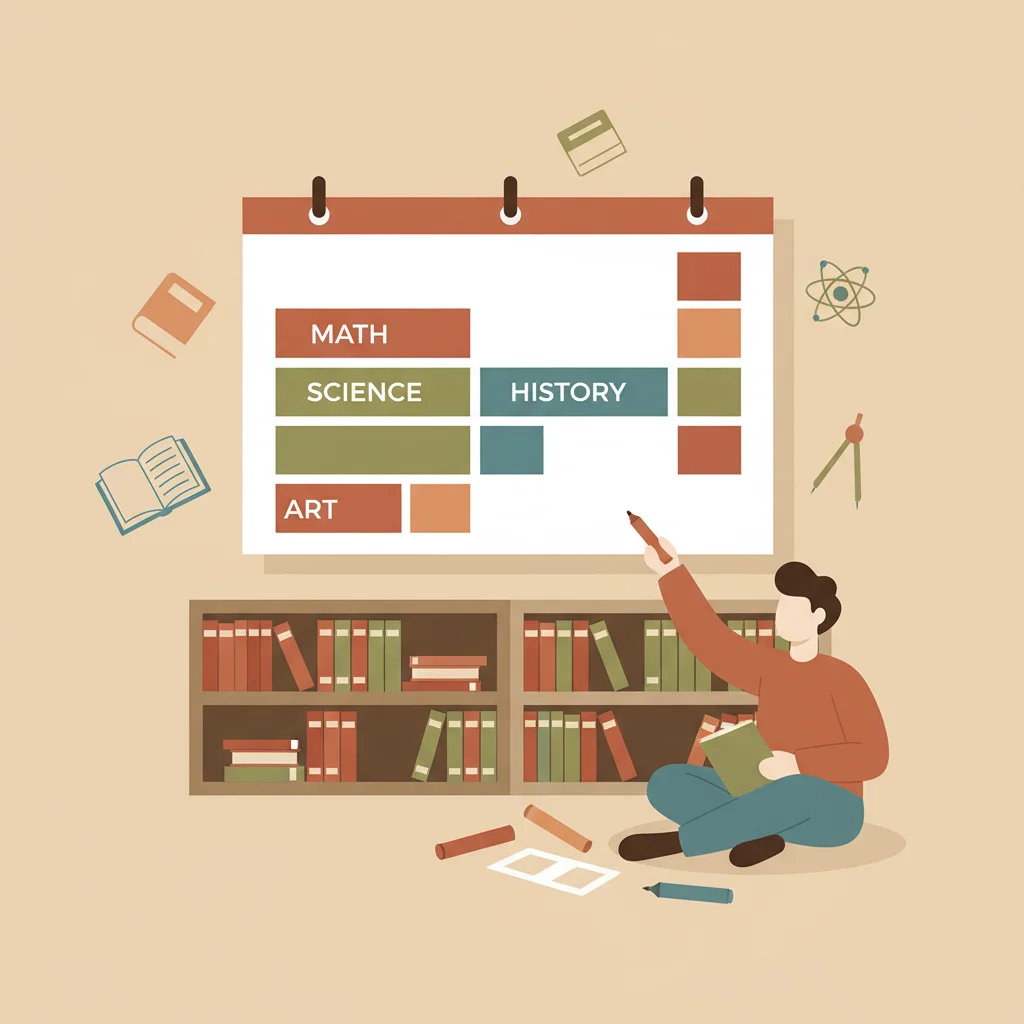
Put away games, performances, club commitments and major project deadlines on the same calendar as review. A week with a late bus ride after a game may need a smaller study task, not the same task pushed later into the night.
As finals approach, ask teachers when review materials will become available and whether the course final is cumulative. Continue with the units already taught while waiting for those details. If the scope changes, update the relevant class plan rather than restarting all twelve weeks. The calendar should record what you now know, including limits on your time.
Track a few useful observations
| Observation | What it suggests for the plan |
|---|---|
| An earlier concept is hard to recall | Add a short return with feedback |
| The answer works only with hints | Try a related task independently later |
| The same step stays confusing | Seek an explanation before adding more drills |
| A session never fits the week | Move or reduce it instead of repeatedly failing it |
A practice result tells you about that task under those conditions. It does not predict your final grade.
Use Wizidoo for practice, not as the calendar
Wizidoo prepares questions from course material uploaded as photos or a PDF. Its announced new path includes steps and review of mistakes; check availability. Use it in a slot you choose, then return to the written work your class requires.
The app doesn't calculate review dates or know all your school deadlines. Its course indicator reflects answers recorded there. For an English-speaking student, begin with the web app; the iPhone app currently remains French.
If you already have less time, use the two-week plan. If you have the full twelve weeks, start with one current lesson tonight. That is how the long plan becomes real.