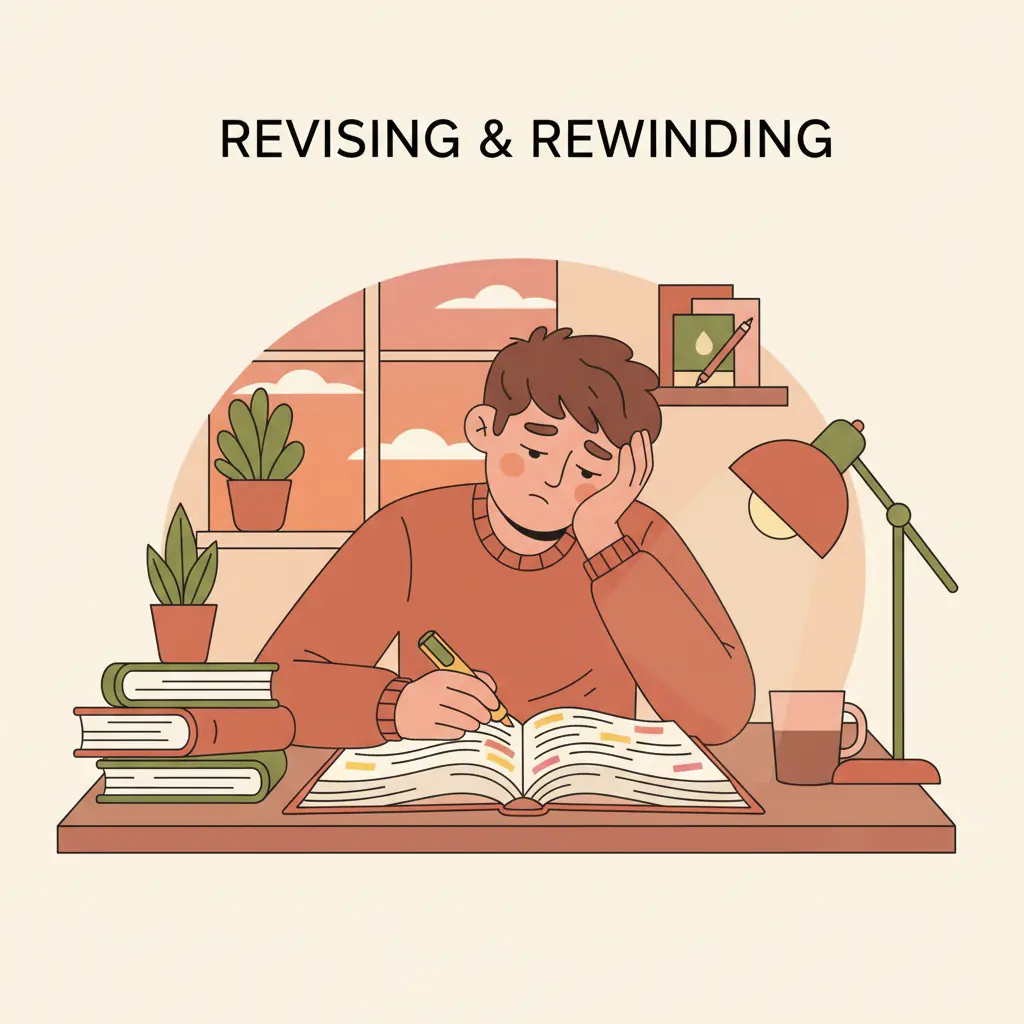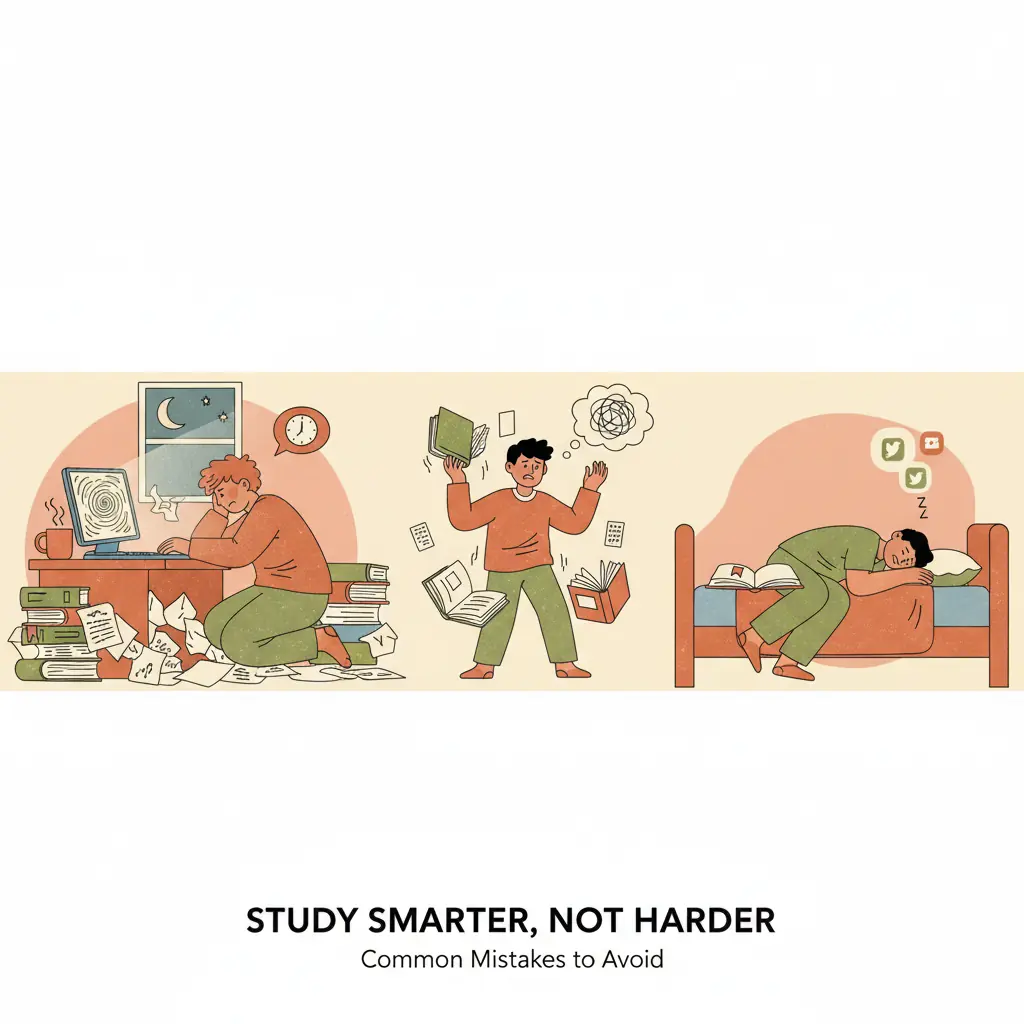
Your calendar says you studied for two hours. The unfinished practice test suggests something else. Before adding another hour, look at what happened during the first two.
Common study mistakes are often reasonable habits carried too far: rereading becomes the whole session, making cards replaces using them, or checking the grade takes the place of examining the error. Here are five changes you can try during an ordinary high school or college week.
1. Preparing to study for longer than you study
Organizing a folder, rewriting headings and choosing a timer can make it easier to start. But if the session ends before you answer a question, you have prepared materials without checking what you learned.
Set a practical boundary: gather what you need for one task, then attempt the task. For an introductory chemistry class, that might mean solving a few assigned practice problems before designing a new note-taking system.
Keep useful organization. Drop the work that merely makes the session look complete. If your notes are missing an explanation, ask for it; decorating the page won't supply it.
2. Using recognition as the only test
A familiar paragraph is reassuring. It is also a weak check of whether you can explain the idea without seeing it. Close the notes and try a short response before deciding to move on.
The 2013 review by Dunlosky and colleagues distinguished the evidence for rereading from that for practice testing. It supports adding retrieval practice, not banning reading or declaring every easy session worthless.
For English class, knowing a literary term is one check. Applying it to the assigned passage is another. Ask a question that matches the work you expect to do in class. Our guide to rereading notes shows how to make that switch.
3. Repeating only the question you already know
Once you've corrected a problem, answering the identical version again may become memorization of the solution. Change the example and see whether the reasoning transfers.
Suppose you can solve an equation when the unknown is on the left. Try one with terms on both sides. Explain each operation. If a small change breaks the solution, write down the point where you lose track and bring it to class or office hours.
This doesn't mean beginners should jump straight into the hardest problems. First understand a worked example, then remove help gradually. Difficulty alone is not evidence that a task is useful.
4. Saving every subject for the last night
A crowded week makes cramming tempting. Use the syllabus, class portal or planner to identify the next assessment early enough to return to the material more than once.
A student with a Friday biology test could attempt part of the review sheet on Monday and revisit errors on Wednesday. That plan is an example, not a universal rule. Adapt it around transportation, activities and work shifts.
Our spaced study schedule explains how to make those return visits manageable. If the workload is consistently impossible, a conversation with a teacher or academic advisor may matter more than another timer app.
5. Recording a score without recording the problem
"Six out of ten" tells you how that sample went. It doesn't tell you what to do next. Add a short note: "mixed up mass and weight," "left out evidence" or "understood the question after seeing the first step."
At the next session, use that note to choose practice. The aim isn't to make every number rise continuously. Some unfamiliar questions will expose new gaps, which is information you can use.
For parents, a low practice score should start a conversation about the specific difficulty rather than a judgment about effort. For students, repeated confusion is a reason to get an explanation instead of hiding the result.
Pick one change for the coming week
Choose the mistake that costs you the most time. If preparation takes over, answer the first question earlier. If you forget by Friday, schedule a return visit. Keep a brief record of the change and whether it helped you complete useful work.
Wizidoo can generate questions from photos or a PDF and help you revisit missed answers. Its per-course indicator describes practice in the app; it doesn't prove mastery of the entire class. Your first 3 complete courses are free for life on the English web app; check your preparation with your teacher's exercises too.
Frequently asked questions
Should I change my study habits if I already get good grades?
Check whether you spend unnecessary time on setup or re-answering familiar questions. You only need to adjust your routine if you want to make your study hours more efficient.
How soon should I expect to see improvement after changing methods?
There is no fixed timeline for results. Watch for concrete shifts first, like starting assignments sooner or explaining a previously difficult concept, before judging progress with teacher feedback.
How do I stop spending my whole session organizing notes instead of studying?
Gather only the materials needed for a single task and immediately answer an actual problem. Set a clear boundary so that formatting or decorating notes never replaces answering practice questions.
Why is recognizing an idea in the textbook not enough for test prep?
Recognizing a familiar passage on the page does not prove you can explain it without looking. Close your notes and test yourself to see if you can produce the answer from memory.
Should I jump straight into the hardest practice problems to save time?
No, starting with extreme difficulty is not necessarily helpful. Work through an explained example first, then gradually remove guides and tackle harder variations on your own.
What should I do once I solve an assigned practice problem correctly?
Change the numbers or apply the concept to a new scenario to ensure you understand the underlying rule. Repeating an identical problem risks memorizing the specific steps rather than learning the concept.
How can I avoid last-minute cramming when my week is crowded?
Check your syllabus or portal early to spot upcoming assessments. Try part of a review sheet several days ahead and schedule a later session to revisit your missed questions around your commitments.
Why should I record specific errors instead of just the total score?
A raw score tells you how that practice run went, but it does not guide what to do next. Writing notes like 'confused mass and weight' gives you a clear target for your next review session.
How should parents handle a low practice test score?
Treat the score as diagnostic information rather than a reason to judge effort. Use missed questions to start a practical conversation about which concepts need an explanation from a teacher.
Does a high progress score in Wizidoo guarantee mastery of the whole course?
No, Wizidoo's course indicator only reflects your practice within the app. You must always confirm your preparation against your teacher's actual classroom exercises and tests.