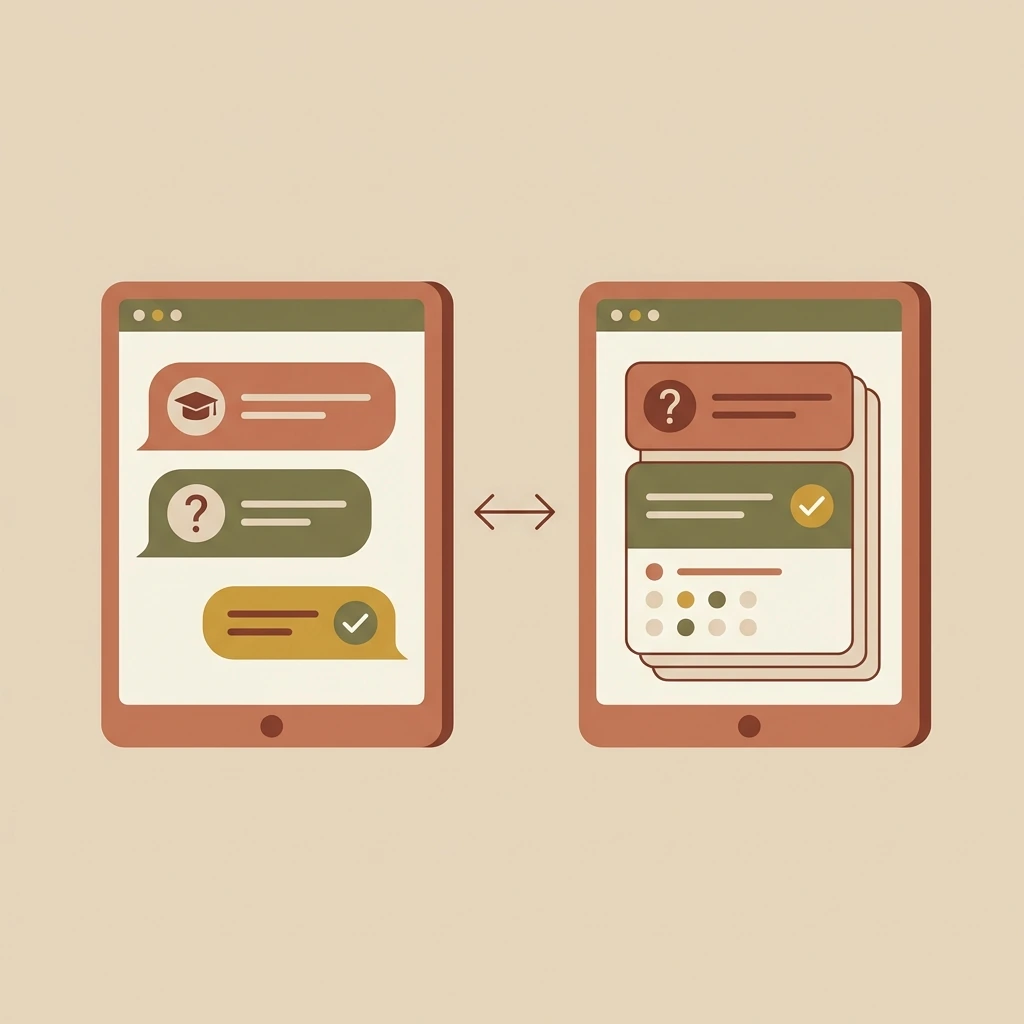
Looking for an Eliott app review before trying it with your child? Its course uploads and parent features deserve a closer look, but a US family also needs to check language, availability, and fit with the actual class material.
Wizidoo publishes this article. The comparison draws on official descriptions rather than a paid-account experiment or a ranking of learning outcomes.
Eliott's offer includes parents
Eliott describes turning course materials into study notes and quizzes, with AI support. Its parent offer includes activity information, session summaries, and subjects to revisit. It advertises access on the web, iOS, and Android.
A parent account is therefore not a feature unique to Wizidoo. The useful comparison is the information a parent sees and the action it supports.
For a US family, confirm English interface and support availability, country eligibility, and the offer's conditions directly. The French official pages alone don't establish those details or alignment with a US curriculum.
Wizidoo starts with your course
Upload photos or a PDF of class material to create practice questions. Read a question, attempt an answer, and compare the feedback with the source. Per-course progress comes from activity inside Wizidoo; it doesn't measure all knowledge in a school subject.
Wizidoo includes a course path with cards, questions, and review of mistakes. It doesn't calculate calendar dates for spaced reviews. You still arrange when to return and keep practicing the formats your teacher requires.
The web interface supports English. The iPhone app also supports English, and there is no native Android app. Browser access is the English option to evaluate for a US student.
Run a short comparison with a difficult paragraph
Choose a paragraph containing two similar concepts, such as weather and climate. Use the same readable material in both tools, within their accepted formats and account limits.
Inspect how each turns the distinction into a question. A question that only repeats a definition may be useful, but it won't show whether you can classify a new example. Check whether an explanation stays faithful to the lesson.
Then leave the app and write your own example. If the feedback was confusing, ask your teacher rather than memorizing it. Both products use generated material; neither should be treated as infallible.
For parents, ask what to do next
In Wizidoo's current version, parents will see course difficulties and, when available, the explanation and advice shown to their child. You could review one point together, ask for an example, and decide whether to contact the teacher.
That is a bounded use of the information. It doesn't verify every homework assignment or tell you why a student is struggling. Our parent dashboard guide shows how to keep the conversation practical.
Read the offer before paying
Wizidoo provides the first 3 complete courses free for life. Premium is annual, charged immediately with no trial period, and the family offer can link up to three children. Check current pricing.
For Eliott, verify the current plan, renewal, limits, language, and device access in your country. Don't infer unlimited use from a free download.
You can try Wizidoo on up to 3 courses free for life. Choose based on the lesson you completed and the feedback you can use, not a claim that any app will raise a grade.
Frequently asked questions
Can US students use Wizidoo on an iPhone in English?
Yes, the iPhone app supports English. US students who need an English interface must access Wizidoo through a web browser.
Is Eliott aligned with US school curricula?
Eliott's official French pages do not establish alignment with US curricula or standards. US families must verify interface language, regional availability, and support directly before subscribing.
Does Wizidoo automatically schedule spaced repetition reviews?
No, Wizidoo does not calculate calendar dates for spaced reviews or mix courses automatically. Students manage their own review schedules and practice formats.
Can you test Wizidoo before committing to a paid plan?
Yes, your first 3 full courses are free for life. The annual Premium plan is charged immediately with no trial period.
Does the parent dashboard confirm whether all school homework is completed?
No, it only tracks activity and difficulties encountered within Wizidoo. It is designed to target a specific lesson issue, not monitor overall school assignments.
Is there a native Android app for Wizidoo?
No, Wizidoo does not offer a native Android app. You can use the web interface on any supported browser with a single account.
How many children can share a Wizidoo Premium subscription?
The annual Premium family offer allows you to link up to three children. Check current pricing terms for profile management details.
Can AI-generated quizzes replace official school tests or exam preparation?
No, neither Wizidoo nor Eliott serves as an official exam bank or a complete measure of classroom knowledge. You should continue practicing real test formats and consulting your teacher.
What file types can be uploaded to Wizidoo for practice?
You can upload course materials as photos or PDF files. Wizidoo then generates questions directly from the provided text and images.
Does a free download of Eliott provide unlimited access?
No, a free download does not mean unlimited usage. You should inspect the current tier, account limits, renewal terms, and regional pricing before enrolling.